

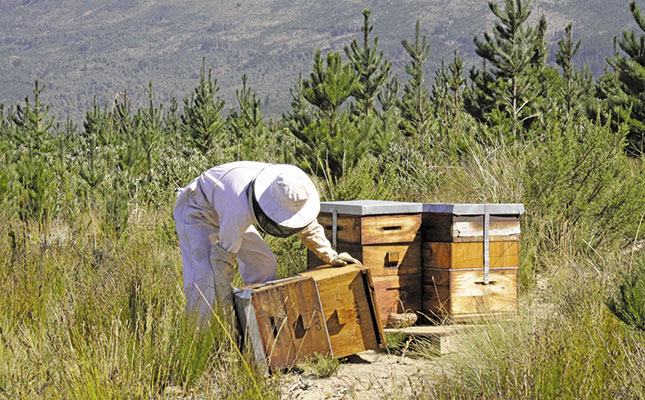
Agriculture Minister John Steenhuisen has positioned the South African beekeeping industry as a strategic national priority, underscoring its pivotal role in food security and economic development. Speaking at the Beekeeping Awareness Field Day in Westlake, Cape Town, the minister committed government support to strengthen the sector, which he famously dubbed “the farmers of the sky,” citing their “silent labour” as foundational to the country’s agricultural output.
Steenhuisen highlighted the significant economic contribution of bees, revealing that pollination services inject over R10 billion annually into South African agriculture. He stressed that nearly 75% of the nation’s food crops rely on these pollinators, making beekeeping a vital contributor to income generation and job creation, from rural beekeepers to farmworkers in pollination-dependent sectors. Recognised under the Animal Improvement Act as agricultural animals, bees are key to the department’s outcomes, including enhanced biosecurity and market access.
However, the minister issued a stark warning regarding the severe threats facing bee populations. Habitat loss, drought, and pesticide misuse are rapidly weakening colonies and reducing honey yields. Steenhuisen implored farmers to adopt integrated pest management practices, urging better communication with beekeepers and responsible, less toxic spraying, especially to avoid mass bee deaths during bloom. He called for a shift in land-use mindset, suggesting every farm, school, and roadside become a “bee garden” filled with indigenous flowers and fruit trees to bolster forage.
Beyond their crucial role in crop production, the minister zeroed in on the honey value chain, noting its untapped potential. South Africa produces only about 2,500 tons of honey annually—less than half its total consumption—leading to heavy reliance on imports, with more than 80% originating from China, supplemented by supplies from Zambia, India, Poland, and Yemen. This high demand has, unfortunately, led to a surge in poor-quality and adulterated honey on store shelves.
To safeguard consumer authenticity and support local industry growth, the Department of Agriculture’s Inspection Services will conduct an operation in December to remove mislabelled or counterfeit products. Steenhuisen emphasised that investing in local beekeepers, processors, and cooperatives is critical to transforming the sector into a thriving value chain that supports rural employment and ensures food authenticity, creating export opportunities.
The government is actively developing a robust framework to secure the industry’s future. Key initiatives include the development of a National Beekeeping/Apiculture Strategy and an American Foulbrood (AFB) Management and Response Strategy, along with a specific Bee Forage Strategy. Furthermore, the department is finalising a Residue Monitoring Plan necessary for honey export to the European Union and establishing a Honey Value Chain Round-Table Forum to foster collaboration. The Agricultural Research Council (ARC) has also been commissioned to conduct critical research, including a national AFB surveillance survey, to inform these strategies. The minister concluded with a clear mandate: “to protect these pollinators, nurture our beekeepers, and grow South Africa’s honey industry into a model of sustainability and pride.”