

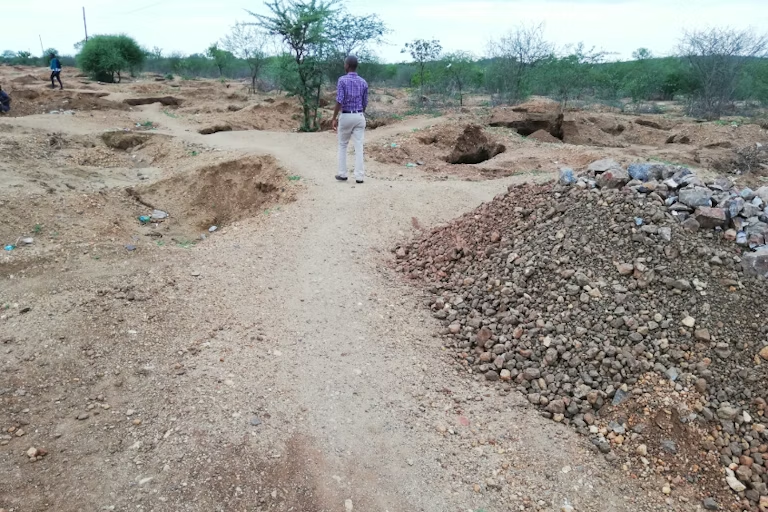
Gwanda, a rural region in Zimbabwe bordering South Africa, is grappling with a profound economic crisis as its smallholder farming community faces a devastating “double shock”: the intensifying effects of climate change coupled with rampant illegal small-scale mining. For four decades, recurring droughts, extreme heat, and unpredictable floods have ravaged harvests, pushing many families into impoverishment. This climate vulnerability has been critically exacerbated by an estimated 400,000 illegal gold miners whose activities result in widespread deforestation, severe land degradation, water contamination, and loss of biodiversity, directly undermining the farmers’ ability to survive.
The combined impacts have created a complex emergency with dire consequences for local livelihoods. Families traditionally rely on rain-fed farming during the wet season, supplementing their income in the dry months through migration for work, remittances, food aid, vending, and harvesting traditional resources like mopane worms. However, illegal mining directly attacks these survival strategies: farmers wake up to find their land dug up by nocturnal miners, their livestock fall into unrehabilitated mine pits, and essential foraging areas are destroyed. One farmer highlighted this existential threat, stating, “My farmland was dug all over, and now I no longer have land for crop production. I now rely on requesting to farm on other people’s land… I depend on crop farming for the sustenance of my family.”
The breakdown of environmental governance in Gwanda is not only causing food scarcity and environmental damage but is also severely disrupting crucial economic infrastructure and social capital. Illegal miners have damaged vital local roads, forcing struggling farmers, who need to travel to Gwanda town or Bulawayo to collect remittances and purchase groceries, to pay exorbitant fees. This increases the cost of a R100 journey to R300 (approximately $16.40) for a longer, alternative route. Furthermore, the limited economic benefits of this activity disproportionately favour a politically connected few, failing to alleviate the broader economic distress.
The crisis imposes a disproportionate burden on women, who are described as “double victims.” Historically, women relied on harvesting and selling resources like mopane worms—an essential drought-coping mechanism—to earn income for food, clothing, and school fees, but illegal miners have cut down the mopane trees, eliminating this vital resource. Furthermore, with local men migrating for work, women are left on damaged land but are largely excluded from the mining sector itself. Those who attempt to join face sexual harassment and are marginalized, often relegated to peripheral work such as sex work, washing clothes, or selling food, highlighting a stark economic and social inequality.
To stabilise the region and protect its development gains, experts argue for immediate, comprehensive structural reform. As Vuyisile Moyo, a postdoctoral research fellow at the African Climate and Development Initiative, University of Cape Town, stated, “Rural farmers in Gwanda had limited capacity to adapt to climate-related and illegal small-scale mining shocks. Poor governance of the natural environment in Gwanda is leading to food scarcity and damage to water and land. It threatens to reverse development gains in these areas.” Moyo’s research indicates that while artisanal mining can be an alternative income source, it requires stringent legal management. The proposed solutions include strengthening governance by urgently reviewing the Mines and Minerals Act, ensuring the police restrict and apprehend illegal miners damaging communal land, and establishing a climate change mitigation program for agriculture that is developed collaboratively with rural farmers and traditional leaders, rather than being imposed through a top-down approach.