

Midrand, South Africa — In a significant move signalling a renewed commitment to environmental stewardship and food security, the Pan-African Parliament (PAP) has overwhelmingly adopted the Model Law on Sustainable Soil Management in Africa. The passage, occurring during the Sixth Ordinary Session of the Sixth Legislature in Midrand, South Africa, is being hailed as a historic milestone in the continent’s pursuit of sustainable development.
The new framework is designed to provide comprehensive guidance to African Union Member States as they draft or strengthen national legislation and policies concerning the use and protection of soil. Its central aims are to promote the sustainable use of soil for food and nutrition security, enhance resilience to climate change, and support strategies for soil conservation and restoration to combat degradation.
The Model Law is directly aligned with the goal of achieving Land Degradation Neutrality (LDN) across the continent and securing the ambitions of the African Union’s Agenda 2063.
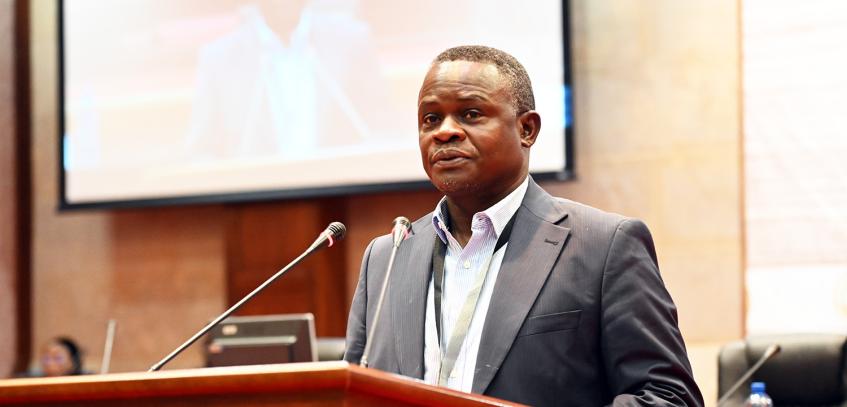
Fourth Vice-President Hon. Djidda Mamar Mahamat, who chaired the session, underscored the urgency of the moment. “Our soil is Africa’s most valuable asset,” he stated, emphasizing the imperative to protect it for current and future generations. He strongly urged all Member States to domesticate the law within their national legal systems.
Hon. Garry Sakata, Chairperson of the Committee on Rural Economy, Agriculture, Natural Resources and Environment, which spearheaded the initiative, presented the measure. He described the Model Law as the product of extensive African-led research, consultation, and stakeholder engagement.
“This law represents years of shared knowledge by African experts, communities, and policymakers,” Mr. Sakata said, noting that it integrates indigenous knowledge, upholds principles of gender equality, transparency, and accountability, and is fundamental to the continent’s prosperity.
The drafting process involved a diverse team of African and international experts, including Dr. Harald Ginzky of the German Environment Agency and Prof. Oliver Ruppel of Stellenbosch University, who worked in close collaboration with the PAP Committee on Agriculture. The framework is grounded in eleven country studies that analyzed existing soil legislation to identify gaps and opportunities for harmonization.
Dr. Ginzky highlighted several pioneering regulatory mechanisms, most notably the Soil Impact Assessment (SIA). This forward-looking tool mandates that soil health be a critical consideration before industrial, agricultural, or infrastructural projects receive approval. He stressed that the law’s success hinges on public participation, awareness-raising, effective zoning, and robust data management.
“This law strikes a balance between economic growth and environmental protection,” Dr. Ginzky noted, describing it as a framework where sustainable soil management becomes a shared responsibility among governments, communities, and the private sector.
Prof. Ruppel framed the law as a “modern, forward-looking framework that helps decolonise Africa’s soils,” empowering nations to govern their natural resources through African-led, science-based approaches. He stressed that beyond providing a strong legislative foundation, the Model Law serves as a crucial platform for cooperation, research, and innovation.
“This is a law written by Africans, for Africa, rooted in science and guided by justice,” Prof. Ruppel affirmed, concluding that it would bolster resilience against climate change and improve livelihoods across the region.
Parliamentarians emphasized the law’s inclusive nature—blending scientific evidence with traditional practices and community input. With Africa hosting an estimated 65 percent of the world’s remaining arable land, members stressed that the continent must take the global lead in sustainable soil management to ensure not just Africa’s, but the world’s, food security.